


“We poets in our youth begin in gladness/But thereof comes in the end despondency and madness.”
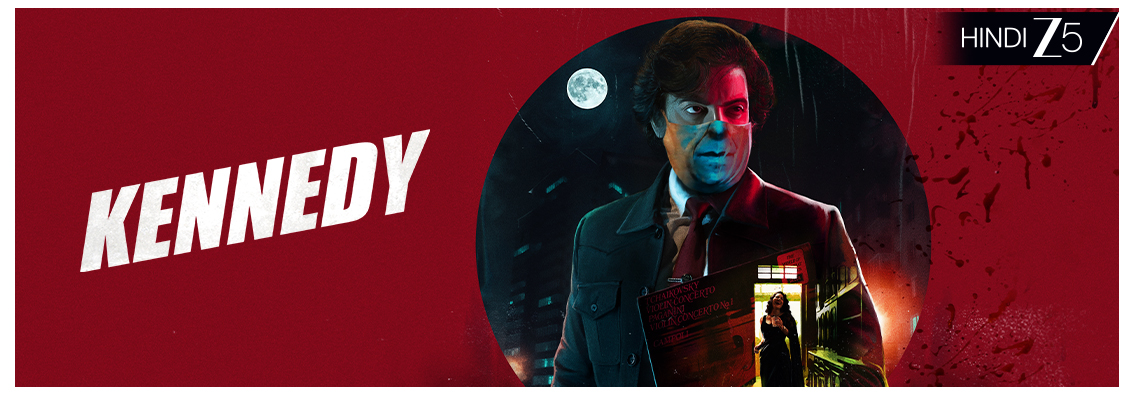
Anurag Kashyap’s Kennedy opens with these lines by romantic poet William Wordsworth. There’s a feeling of despondency – something you can’t put your finger on but you know that what you are about to watch is not for the faint-hearted. The neo-noir thriller, which received a seven-minute-long standing ovation when it premiered at the Cannes Film Festival 2023, deservedly earned praise from critics, with many believing that this is the filmmaker’s return to form. This is high praise for Kashyap, who is known to ask the hard questions and show the truth of reality in its most brutal ways.
Now that the film, starring Rahut Bhat and Sunny Leone, is headed for a release on Z5 on February 20th, it may be a good time to examine how Kennedy fits neatly into the neo-noir genre and why we have not seen enough of it on our screens.
The rise of neo-noir
Simply put, the word noir means black in French, emerging from the crime-drama films with morally grey characters being made in Hollywood in the 1940s and 1950s. Dark and gritty dialogues, interplay of light and shadows, and a general cynicism towards the world – a result of the post-World War II paranoia and hopelessness – are some of the tropes employed by films belonging to this genre. In Bollywood, perhaps one of the first films to delve into this space was Chetan’s Anand’s Neecha Nagar (1946), followed by Guru Dutt’s directorial debut Baazi (1951). Other Hindi films that continued the trend included Howrah Bridge (1958), Ittefaq (1969) and Kohraa (1964) among others.
However, with the rise of other genres, particularly Amitabh Bachchan’s Angry Young Man phase, noir seemed to have bidden adieu to Hindi films, until it resurfaced with filmmakers such as Sriram Raghavan, Vishal Bhardwaj and Kashyap himself, delving deeper into the space. Manorama Six Feet Under, Johnny Gaddaar, No Smoking, Raman Raghav 2.0, Badlapur, Being Cyrus, Merry Christmas and Khufiya are some of the films released during the last two decades that took the genre forward.
In the shadows
Renowned theatre director and a filmmaker himself, Mohit Takalkar who plays a corrupt Police Commissioner in Kennedy, remarks that the prime difference between classic noir and neo-noir, is that while the former dealt with post-war disillusionment and fatalism, the latter is about modern alienation institutional decay and the erosion of moral clarity in a world that screams progress but feels spiritually hollow. “Kennedy sits in this newer space where the genre is not being performed but inhabited. The film does not explain its moral universe. It simply presents it and leaves the audience to sit with the unease,” Takalkar says, unearthing the world the film inhabits. For Takalkar, entering Kennedy meant entering Anurag Kashyap’s world which is always uncomfortable, morally slippery and unjudged. “His cinema is gritty not because of surface darkness but because it refuses moral consolation,” he shares.
Back in 2007, Navdeep Singh marked his directorial debut with Manorama Six Feet Under, considered by many as one of the finest neo-noir films in Hindi cinema. Starring Abhay Deol and Gul Panag in lead roles, the intriguing and complex thriller dealt with cynical characters driven by their own lusts and greed. The director, who went on to make films such as NH10 and Laal Kaptaan, believes that neo-noir needs to capture a snapshot of society at a point of time and reflect on it. “It is not just about having a cynical hero and his approach towards life but also trying to capture something about society itself and making a comment on it,” Singh says, adding that he really enjoyed watching Kennedy. “It is a fantastic return to form for Anurag. It was stuck for a long time and it is great that the audience in India will be able to watch it now,” he adds.
Takalkar is of the view that films belonging to this genre, such as Taxi Driver, Drive or Sin City, connect not because of their narrative similarity but because of moral atmosphere. “These films are less about plot and more about a sustained psychological condition. They place the viewer inside a disturbed consciousness and refuse to offer any relief. Kennedy belongs in that global conversation because it commits fully to that condition. It does not localise neo-noir by diluting it. It localises it by allowing Bombay to breathe as a noir city in its own right. The corruption, violence and silence feel systemic rather than sensational. Characters are not seeking redemption. They are negotiating survival within the rot,” Takalkar says, adding that this is precisely what aligns Kennedy with the global neo-noir tradition rather than making it a genre exercise.
“There are no heroes in a neo-noir. There are only anti-heroes and morally grey characters,” says screenwriter Sudip Sharma, who worked closely with Singh on NH10 and Laal Kaptaan, and is best known for creating the critically-acclaimed neo-noir crime series Paatal Lok as well as the gritty Punjabi crime drama Kohrra. Some of his favourites from Hollywood include Chinatown, Double Indemnity and Vertigo. “From Indian cinema, Manorama Six Feet Under really opened up the genre. Sriram (Raghavan) has done some great work with films such as Johnny Gaddaar, Badlapur and Andhadun. I am also glad that Kennedy is coming out; it is a great neo-noir film and I hope it does well,” he adds.
Worth the risk
Considering there are so many films belonging to this genre that have proved to be absolute gamechangers, filmmakers agree that there are still few and far between. It may be that not everyone has the bent of mind required to make a film like that. “I think people who are into noir are themselves cynical,” believes Singh, “They see through the façade or maya of the society. It is a tricky space.” Takalkar seconds his viewpoint. “A true neo-noir film requires a director who understands that meaning emerges from absence as much as from action. Performances have to be internalised. Characters feel observed rather than explained. The camera cannot aestheticise violence for pleasure. It must observe it as a symptom of deeper decay,” he explains. Listing some of the most cutting-edge neo-noir works from world cinema, such as Cure by Kiyoshi, Memories of Murder, Only God Forgives and The Consequence of Love, he says that these films refuse to reassure. “They allow discomfort to accumulate. That’s the real discipline of neo-noir and also why so few films genuinely succeed in the genre,” he says.
With the Indian audiences now having the privilege to watch the best of Indian and international cinema at the click of a button, this is perhaps the ideal time for more bold filmmaking. Says Akkshay Rathie, Director, Ashirwad Theatres Pvt Ltd, “As a market, the Indian audiences are accepting of any and every genre of storytelling. They just need to be given something which is worth their time, money and effort. Look at movies such as Andhadhun, Johnny Gaddaar and Dev.D. They performed phenomenally well. So, I think the audience has always been ready. The ball’s always been in our court to give them what they deserve.”
For a genre that thrives on the truth of reality, Kennedy certainly seems to be a mirror we can no longer afford to look away from. There may be no heroes in a neo-noir, but there is, once again, a filmmaker who isn’t afraid to let us sit in the dark. Welcome back, Mr Kashyap.